

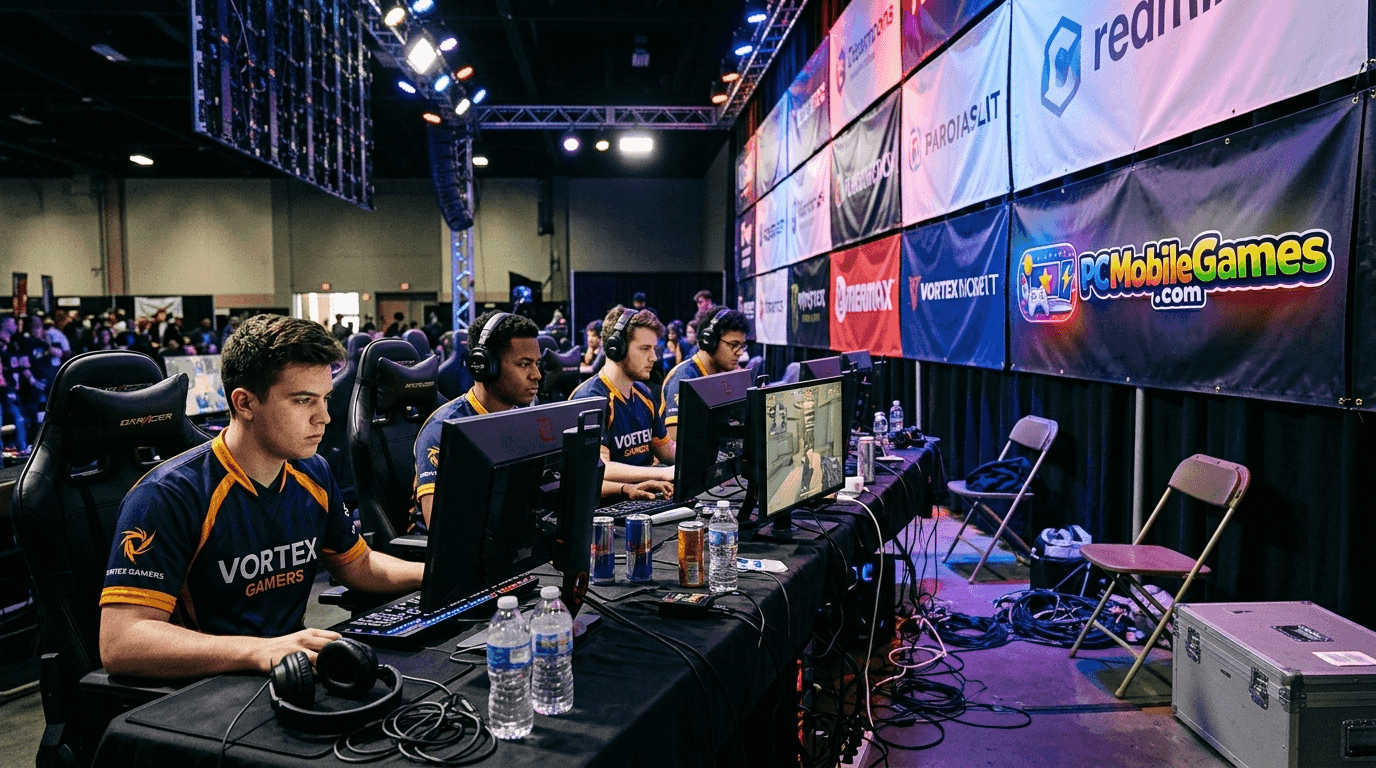
Many assume esports players are just hardcore gamers who play longer hours. The reality is far more nuanced. Esports players average 21.5 years old, are predominantly male, and display distinct psychological profiles compared to recreational gamers. They prioritize competition and social connection over escapism or solo mastery. As esports evolves into a mainstream entertainment industry in 2026, understanding these players and the technology, feedback systems, and cultural shifts driving this growth becomes essential. This article explores esports market trends, player demographics, the technological backbone enabling live events, social dynamics influencing player psychology, and esports’ broader impact on gaming culture and industry practices.
Key takeaways
| Point | Details |
|---|---|
| Market expansion | Esports revenue and viewership continue rapid growth in 2026, driven by sponsorships, streaming platforms, and tournament prizes. |
| Player profile | Esports players are younger, more competitive, and socially motivated compared to casual gamers. |
| Technology critical | Low-latency CDNs and fast matchmaking systems using Redis enable seamless live events and fair competition. |
| Feedback matters | Active-constructive feedback boosts player optimism, while negative feedback increases addiction risks. |
| Cultural influence | Esports reshapes gaming culture, community engagement, and industry development strategies. |
Esports market growth and industry trends in 2026
The esports industry has transformed from a niche hobby into a billion-dollar global phenomenon. In 2026, esports market growth continues accelerating with expanding viewership numbers and revenue streams that rival traditional sports. Major tournaments now attract millions of concurrent viewers, while sponsorship deals from non-endemic brands signal mainstream acceptance. Streaming platforms like Twitch, YouTube Gaming, and emerging competitors fuel this expansion by providing accessible viewing experiences and interactive features that traditional sports broadcasts cannot match.
Several key factors drive this momentum. First, the audience demographic skews younger and more digitally native, making esports a prime advertising channel for brands targeting millennials and Gen Z. Second, tournament prize pools have grown exponentially, with some events offering over $40 million in winnings, attracting elite talent and legitimizing esports as a viable career path. Third, technological improvements in streaming quality, mobile accessibility, and virtual reality integration create more immersive spectator experiences. Fourth, esports growth factors include game publishers investing heavily in competitive formats, building dedicated esports ecosystems around their titles.
Business models within gaming have evolved to accommodate esports. Free to play games with cosmetic microtransactions generate revenue while maintaining large player bases necessary for competitive scenes. Media rights deals, merchandise sales, and in-game advertising provide additional income streams. Game developers now design titles with spectator appeal in mind, incorporating features like observer modes, replay systems, and clear visual communication that make matches easier to follow. This shift affects not just esports titles but influences broader game design philosophy across the industry.
The competitive landscape also fosters innovation in player engagement and retention strategies. Regular seasonal competitions, ranked ladders, and achievement systems borrowed from esports now appear in casual games. This crossover demonstrates how competitive gaming principles permeate the entire gaming ecosystem. As esports continues maturing, expect further integration with traditional entertainment, education programs teaching esports skills, and increased government recognition of esports athletes.
Pro Tip: Track viewership metrics and sponsorship announcements to identify which esports titles are gaining momentum, as these often indicate where the industry will focus development resources next.
Who are esports players? Demographics and motivations
Esports players represent a distinct subset within the broader gaming population. Research shows the average esports player is 21.5 years old, with male players comprising the majority, though female participation is gradually increasing. What truly sets esports players apart, however, are their psychological characteristics and motivations. Compared to recreational gamers or even highly engaged non-competitive players, esports participants exhibit lower negative affectivity and higher sociability scores. They seek competitive challenge and social validation rather than using games primarily for stress relief or escapism.
Motivational research reveals esports players are driven by three primary factors. Competition ranks highest, as these players thrive on testing their skills against worthy opponents and climbing ranked ladders. Social connection comes second, with team-based esports fostering deep bonds between players who coordinate strategies and celebrate victories together. Achievement and recognition form the third pillar, as players pursue tournament wins, sponsorships, and community respect. Notably absent from top motivations is escapism, the desire to avoid real-world problems, which ranks higher among recreational gamers dealing with stress or dissatisfaction.
Understanding these demographic and psychological patterns helps explain esports player behavior and community dynamics. The younger age profile means esports players grew up with digital connectivity as the norm, making online competition and streaming natural extensions of their social lives. The emphasis on competition over escapism suggests healthier gaming relationships when proper support systems exist, though risks remain for players with lower self-esteem who may develop problematic gaming patterns.
| Player Type | Average Age | Primary Motivation | Social Engagement |
|---|---|---|---|
| Esports Players | 21.5 years | Competition | High |
| Recreational Gamers | 25-30 years | Entertainment | Moderate |
| Highly Engaged Non-Competitive | 23-28 years | Mastery/Escapism | Low to Moderate |
Key demographic insights include:
- Esports players spend more time practicing specific games rather than playing diverse titles
- They actively consume esports content as spectators, studying professional strategies
- Many participate in amateur leagues or online tournaments before considering professional paths
- Social media presence and personal branding matter significantly for aspiring professionals
Pro Tip: Positive social feedback from teammates and the community greatly influences player optimism and sustained motivation, making supportive environments crucial for player development.
Technological backbone of esports: live events and matchmaking
The technical infrastructure supporting esports represents one of the most sophisticated applications of gaming technology. Live esports events demand extremely low latency delivery to prevent gameplay issues, ensure fair competition, and provide smooth viewing experiences. Traditional Content Delivery Networks designed for static content struggle with the dynamic, real-time nature of live esports broadcasts. Specialized CDN architectures now incorporate edge computing, adaptive bitrate streaming, and regional server clusters to minimize latency while handling massive concurrent viewer loads.
Matchmaking systems form another critical technology pillar. Modern esports titles use in-memory databases like Redis to achieve the millisecond response times necessary for real-time player matching. These systems must evaluate multiple factors simultaneously, including player skill ratings, preferred game modes, geographic regions for optimal latency, and queue wait times. Redis excels in this role because it maintains sorted sets for skill-based ranking, supports pub/sub messaging for real-time notifications, and handles the high read/write throughput that matchmaking demands.

The architecture prioritizes speed over storage efficiency through data denormalization. Rather than querying multiple database tables, matchmaking systems duplicate player data across different data structures optimized for specific queries. For example, a player’s information might exist in separate Redis structures for skill ranking, regional grouping, and active session tracking. This redundancy trades storage space for query performance, a worthwhile exchange when matching players within seconds matters more than minimizing database size.
| Technology Component | Primary Function | Key Benefit |
|---|---|---|
| Edge CDN Nodes | Reduce geographic latency | Smoother live streams |
| Redis In-Memory DB | Fast matchmaking queries | Sub-second player matching |
| Adaptive Bitrate | Adjust quality to bandwidth | Consistent viewer experience |
| Regional Servers | Minimize ping times | Fair competitive gameplay |
Considerations for matchmaking systems include:
- Game mode variations requiring different skill metrics
- Time of day affecting available player pools
- Party grouping where friends queue together
- Anti-cheat integration to flag suspicious accounts
- Latency tolerance thresholds varying by game genre
These technologies driving esports growth continue evolving. Machine learning now predicts optimal match compositions, while blockchain technology experiments with transparent tournament result verification. As esports scales, the technical challenges of maintaining fair, low-latency competition across global player bases push innovation in network engineering and database design.
Pro Tip: Matchmaking speed often trumps perfect accuracy, with systems prioritizing reasonable matches quickly over ideal matches slowly to maintain player engagement.
Social interaction, feedback, and player psychology in esports
The social dimension of esports profoundly affects player psychology, motivation, and wellbeing. Interpersonal capitalization, the practice of sharing positive accomplishments with others, occurs frequently in esports communities through streaming, social media posts, and team celebrations. How community members respond to these shared victories significantly impacts player mental states. Research demonstrates that active-constructive feedback increases optimism among players, reinforcing their motivation to continue competing and improving.
Feedback styles fall along a spectrum from supportive to destructive. Active-constructive responses, genuine enthusiasm and detailed recognition of achievements, produce the most positive psychological outcomes. Passive-constructive feedback, simple acknowledgment without elaboration, provides mild benefits. Passive-destructive responses, ignoring accomplishments or changing subjects, create neutral to slightly negative effects. Most harmful are active-destructive reactions, criticism or diminishing of achievements, which correlate with decreased self-esteem and increased gaming addiction symptoms.
The relationship between feedback, self-esteem, and gaming addiction reveals important mental health considerations. Players with lower baseline self-esteem prove more vulnerable to developing problematic gaming behaviors, particularly when they experience predominantly negative feedback from their gaming communities. This creates a concerning cycle where struggling players receive criticism, their self-esteem drops further, and they may increase gaming time seeking validation, potentially developing addictive patterns. Conversely, supportive communities that provide constructive feedback help buffer against these risks.
Key psychological dynamics include:
- Team-based esports create stronger social bonds than solo competitive games
- Streaming culture exposes players to both supportive fans and toxic critics
- Anonymous online interaction sometimes enables more extreme feedback than face-to-face communication
- Professional players face intense public scrutiny affecting mental health
- Community moderation and positive culture initiatives significantly impact player experiences
Understanding these feedback dynamics in gaming helps explain why some esports environments foster healthy competition while others breed toxicity. Game developers increasingly implement systems to encourage positive interaction, including commendation features, honor systems, and consequences for abusive behavior. Mental health support for professional players has also gained attention, with teams hiring sports psychologists and establishing wellness programs.
The social architecture of esports, from team structures to community platforms, shapes player psychology as much as gameplay mechanics do. Recognizing this influence allows stakeholders to design healthier competitive environments that maximize the benefits of social connection while minimizing risks of negative feedback and addiction.
Esports’ broader impact on the gaming community and culture
Esports has fundamentally altered gaming culture and industry practices in ways extending far beyond competitive play. What began as grassroots LAN tournaments has evolved into a mainstream entertainment category that influences industry trends and community behavior significantly. Professional players have become celebrities with millions of followers, shifting perceptions of gaming from solitary hobby to legitimate spectator sport. This cultural elevation attracts broader audiences, including people who watch esports without playing the games themselves, similar to traditional sports fans.
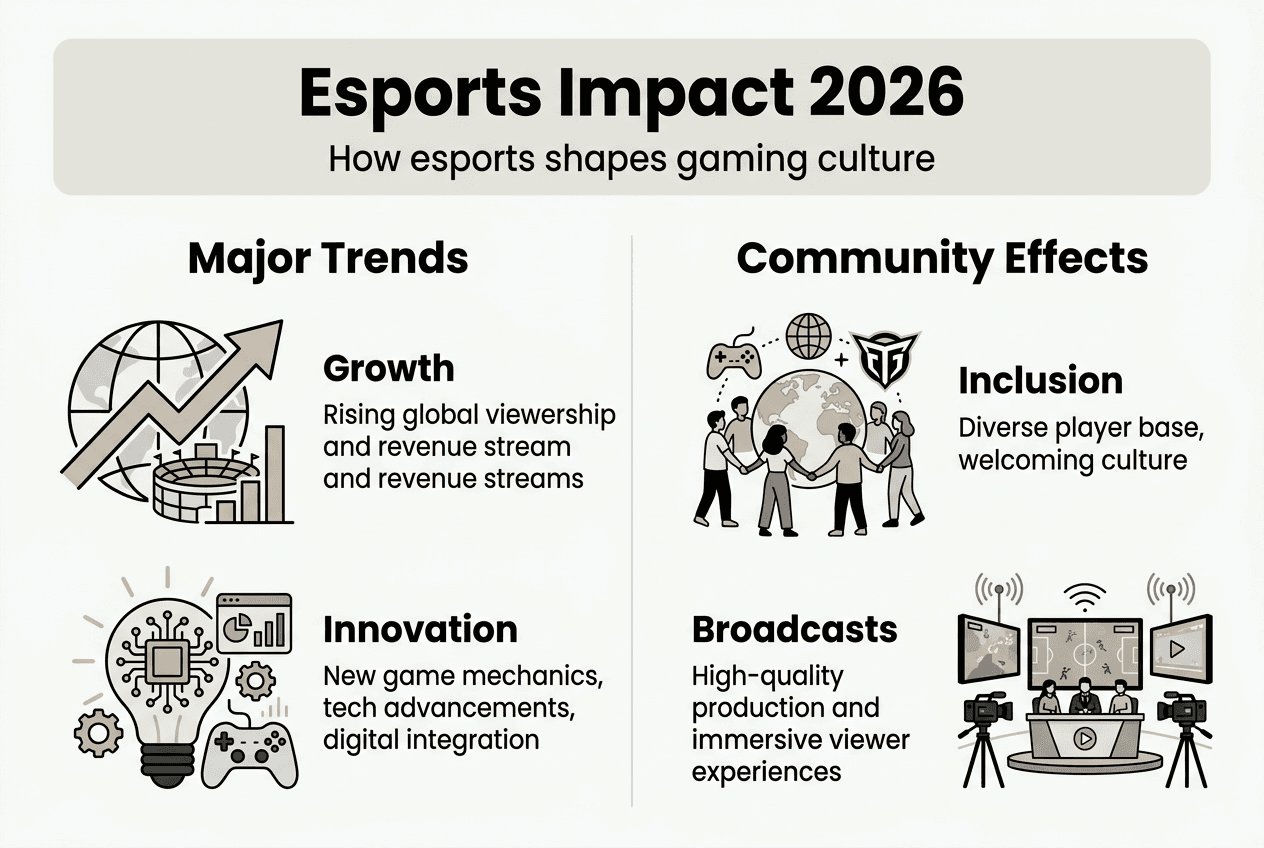
Community engagement dynamics have transformed as esports provides structured pathways for player progression. Amateur leagues, collegiate esports programs, and online tournaments create ladders from casual play to professional competition. This structure gives players tangible goals beyond personal enjoyment, fostering dedication and skill development. The global nature of esports competitions also facilitates international connections, with players forming friendships and rivalries across continents, breaking down geographic and cultural barriers through shared competitive passion.
Game developers now design titles with esports potential as a primary consideration. This means:
- Implementing spectator-friendly interfaces and camera systems
- Balancing gameplay for competitive integrity rather than just casual fun
- Creating regular content updates to maintain competitive freshness
- Building ranked systems and seasonal competitions into core game loops
- Investing in anti-cheat technology to preserve competitive legitimacy
- Partnering with tournament organizers and streaming platforms early in development
Media coverage of gaming has expanded dramatically due to esports success. Traditional sports networks now broadcast major tournaments, gaming journalists cover esports alongside conventional sports, and universities offer esports scholarships and degree programs. This mainstream recognition legitimizes gaming as a cultural force and career option, reducing stigma that previously surrounded intensive gaming.
The economic impact ripples through related industries. Peripheral manufacturers design specialized gaming equipment, streaming technology companies develop better broadcast tools, and venues construct esports arenas. Game updates and balance patches increasingly reflect competitive play feedback, meaning esports influences how millions of casual players experience games. When professional players identify overpowered strategies or broken mechanics, developers prioritize fixes that affect the entire player base.
Staying connected to gaming news and esports trends helps you understand where the industry directs resources and attention. Esports growth drives innovation in gaming technology, from better netcode for online play to sophisticated feedback systems managing player behavior. Player wellbeing initiatives, initially developed for professional competitors facing burnout, now inform broader industry approaches to healthy gaming.
The integration of esports into mainstream gaming culture represents a fundamental shift in how we conceptualize video games. They are no longer merely products for individual consumption but platforms for competition, community, and cultural expression. This transformation continues reshaping gaming economics, social dynamics, and creative direction in 2026 and beyond.
Explore more about gaming and esports
Whether you are diving into competitive play or simply want to enhance your gaming experience, PCMobileGames offers comprehensive resources tailored for 2026’s gaming landscape. Our platform provides up-to-date guides covering everything from beginner strategies to advanced techniques that help you stay competitive. Looking to gain an edge in your favorite titles? Check out our game cheat codes guide where we show you how to find, verify, and safely apply codes without compromising your account security or gaming experience.
Mobile gaming continues growing as a competitive platform, and our mobile gaming tips help you optimize performance, improve controls, and discover titles with thriving competitive scenes. We cover PC, mobile, console gaming, and esports developments, ensuring you stay informed about industry trends, new releases, and community events. Our expert reviews and honest assessments help you make informed decisions about which games deserve your time and investment in an increasingly crowded market.
Frequently asked questions about esports’ role in gaming
What distinguishes esports players from casual gamers?
Esports players are younger on average, around 21.5 years old, and display higher sociability with lower negative affectivity compared to recreational gamers. Their primary motivations center on competition and social connection rather than escapism or stress relief.
How does technology impact the quality of esports viewing?
Specialized CDN architectures with edge computing and adaptive bitrate streaming deliver low-latency broadcasts essential for live esports events. These technologies prevent lag, ensure smooth viewing experiences, and handle millions of concurrent viewers without performance degradation.
Can esports participation affect player mental health?
Yes, feedback dynamics significantly influence player psychology. Active-constructive feedback boosts optimism and motivation, while active-destructive criticism correlates with decreased self-esteem and increased gaming addiction symptoms, especially among players with lower baseline self-esteem.
What motivates players to join esports communities?
Competition ranks as the primary motivator, followed by social connection and achievement recognition. Esports players seek to test skills against worthy opponents, build relationships with teammates, and earn respect within their gaming communities through tournament success and skill demonstration.
How is esports shaping the future of video games?
Developers now design games with esports potential as a core consideration, implementing spectator-friendly features, competitive balance, and anti-cheat systems. Esports success influences game updates, balance patches, and industry investment priorities, affecting how millions of casual players experience games.
Recommended
Comments
0 comments

